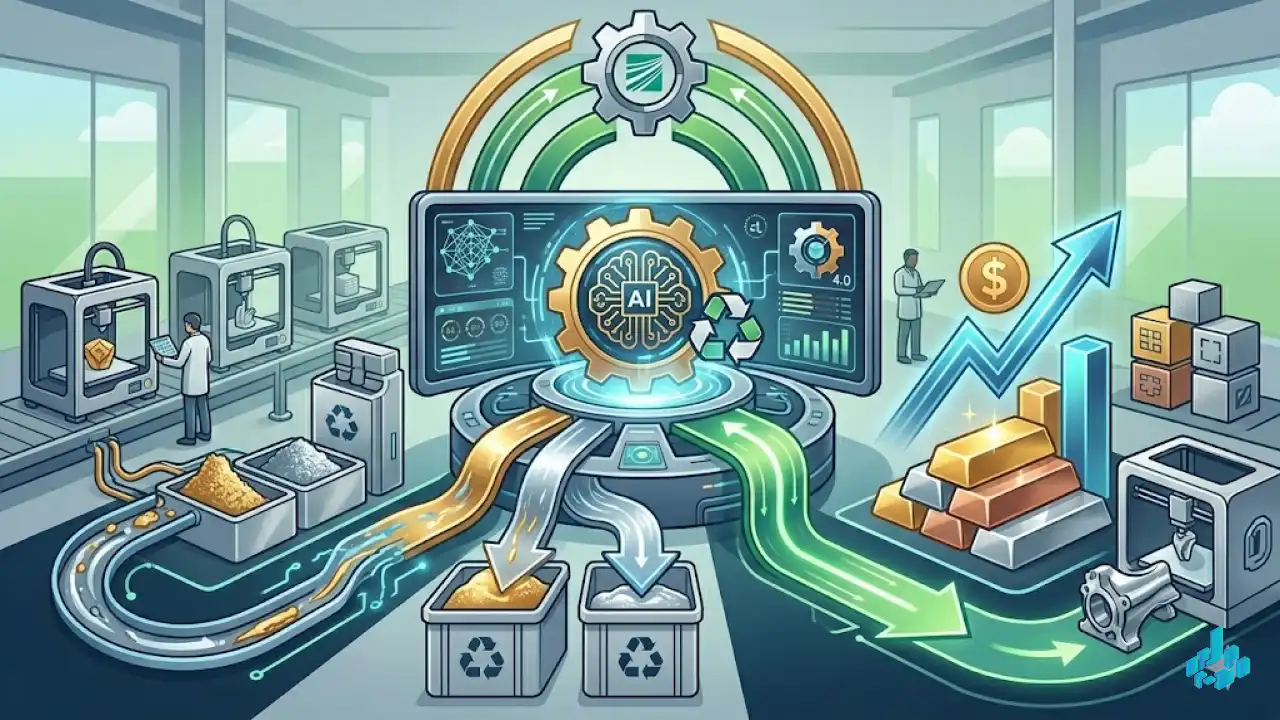
The algorithms will be used not for designing parts, but for evaluating profitability and managing the material recycling process. Industrial 3D printing leaves a significant percentage of expensive waste—unused metal powders and special polymers. AI models are capable of analyzing the composition of the waste in real-time and structuring the optimal technological cycle for its reuse. This is a pure industrial B2B case where machine learning solves utilitarian sustainability problems, saving factories hundreds of thousands of euros on raw material purchases.
Source: Fraunhofer IAPT / IDW
Industry 4.03D PrintingRecyclingFraunhoferSustainability