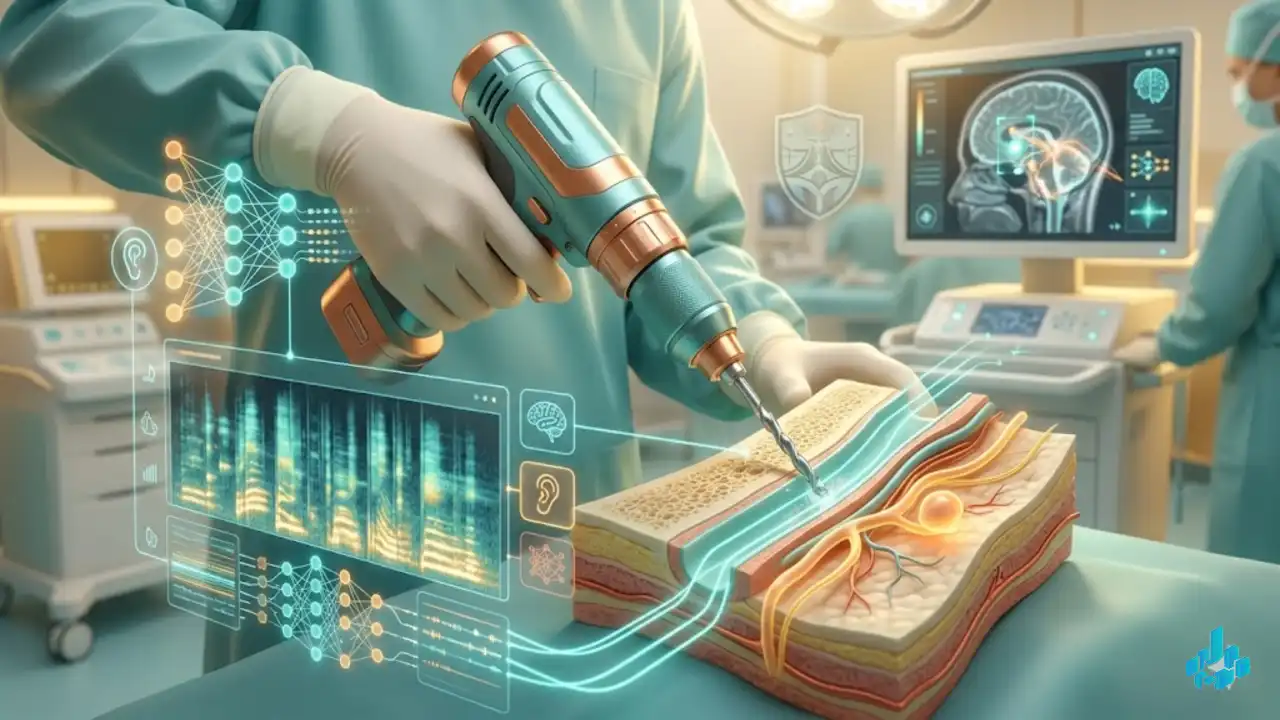
The neural network is trained to analyze intraoperative sounds in real time. In particular, the model unmistakably determines the critical moment a surgical drill penetrates the bone. This solves a major problem in orthopedics and neurosurgery: the human ear cannot always catch micro-changes in pitch, which leads to damage to the soft tissues behind the bone. The integration of multimodal AI assistants in operating rooms is a prime example of how algorithms are becoming physical lifesavers, ensuring zero tolerance for errors.
Source: Scientific Reports / Nature
MedTechOsaka UniversityExpert AIAcousticsSurgery